
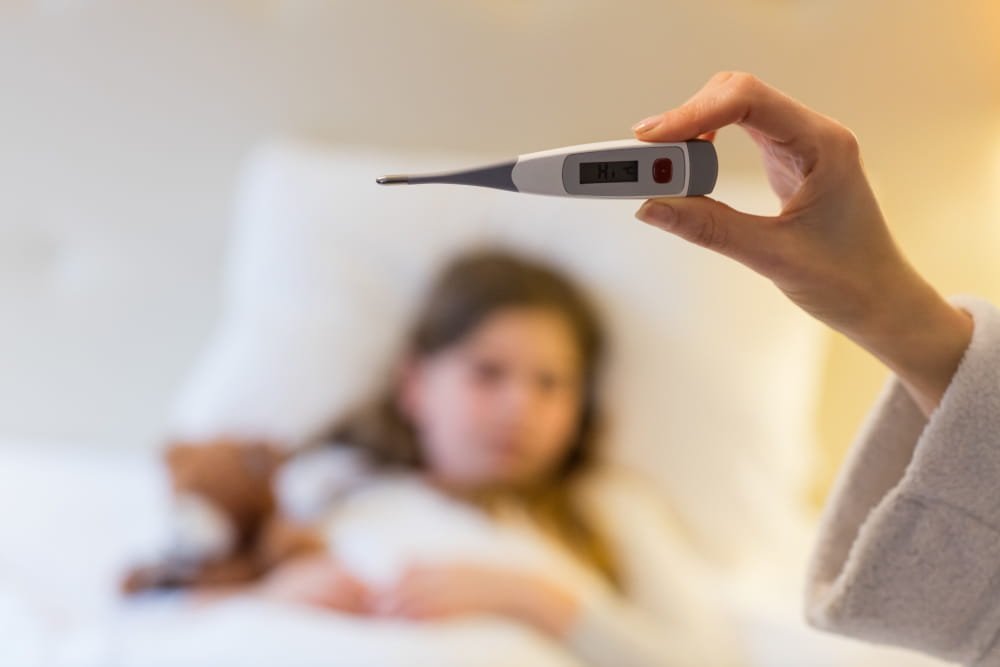
Fever is one of the most common reasons parents take their children to the doctor. It can be alarming to see your child’s temperature rise, but in many cases, fever is a natural and helpful response of the body to fight infections.
At Nest Newborn and Children’s Hospital, we help parents understand the difference between normal fever and situations that need medical attention. Knowing when to stay calm and when to act can make a big difference in your child’s care.
What Is Fever in Children
Fever is defined as a body temperature above normal levels, usually above 100.4°F or 38°C. It is not a disease but a symptom that indicates the body is fighting an infection.
Fever can occur due to viral infections, bacterial infections, vaccinations, or even overheating. In most cases, it is temporary and resolves within a few days.
Why Fever Happens
Fever is the body’s defense mechanism. When harmful germs enter the body, the immune system releases chemicals that increase body temperature. This higher temperature helps slow down the growth of bacteria and viruses.
In children, the immune system is still developing, so they may experience fever more frequently than adults.
Common Causes of Fever in Children
- Viral infections such as cold or flu
- Bacterial infections like throat or ear infections
- Teething in infants, though usually mild
- Post-vaccination response
- Stomach infections
- Environmental factors like heat exposure
Most fevers are mild and manageable at home.
When Fever Is Normal
Fever is usually not a cause for concern if:
- The child is active and playful
- The child is drinking fluids well
- The fever lasts less than 2 to 3 days
- There are mild symptoms like cold or cough
In these cases, fever is helping the body recover, and simple home care is often enough.
How to Manage Fever at Home
- Keep your child well hydrated with water, soups, or oral fluids
- Dress your child in light clothing
- Ensure proper rest and sleep
- Use a lukewarm sponge bath if needed
- Give fever medicine only as prescribed by your pediatrician
Avoid cold baths or heavy blankets, as they can make the child uncomfortable.
When to Worry About Fever
Fever can sometimes indicate a serious condition. Seek medical attention if:
- Fever is above 102°F or 38.9°C
- Fever lasts more than 3 days
- The child is very drowsy or irritable
- There are seizures or convulsions
- The child refuses to eat or drink
- There is difficulty breathing
- There is persistent vomiting or diarrhea
These signs require immediate evaluation by a pediatrician.
Fever in Infants: Special Care Needed
Babies below 3 months require extra attention. Even a mild fever can be serious in newborns.
Contact a doctor immediately if a baby under 3 months has any fever. Do not attempt home treatment without medical advice.
Understanding Febrile Seizures
Some children may experience seizures due to a sudden rise in temperature. These are called febrile seizures and can be frightening for parents.
In most cases, febrile seizures are not dangerous and do not cause long-term damage. However, immediate medical consultation is important to rule out serious conditions.
Do Not Panic About the Number
Many parents focus only on the thermometer reading, but how your child behaves is equally important.
A child with mild fever who is active may not need urgent care, while a child with low fever but unusual behavior may need medical attention.
Always observe your child’s overall condition, not just the temperature.
Tips to Prevent Frequent Fever
- Maintain good hygiene habits
- Ensure proper nutrition and hydration
- Keep vaccinations up to date
- Avoid exposure to sick individuals
- Encourage regular handwashing
These simple steps help reduce the risk of infections.
When to Visit a Pediatrician
Visit your pediatrician if you are unsure about your child’s condition. It is always better to seek expert advice rather than delay treatment.
At Nest Newborn and Children’s Hospital, our pediatric team provides accurate diagnosis and personalized care for fever and related conditions.
Final Thoughts
Fever in children is common and often a sign that the body is fighting infection. Most cases are mild and can be managed at home with proper care and observation.
However, knowing the warning signs is essential to ensure timely medical intervention when needed.
At Nest Newborn and Children’s Hospital, Nalgonda, we are committed to providing safe, compassionate, and expert pediatric care to keep your child healthy and protected.
Your awareness and timely action can make all the difference in your child’s recovery and well-being.