
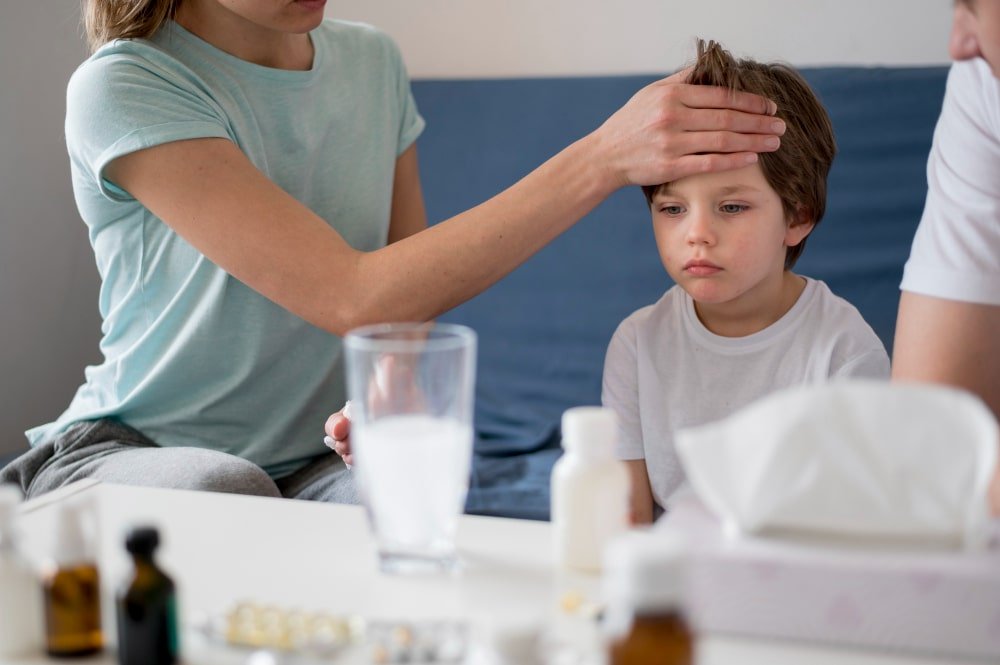
Every parent knows that childhood comes with its share of fevers, coughs, and sneezes. While most minor illnesses are part of growing up and help strengthen a child’s immune system, it can be worrying to see your little one uncomfortable.
At Nest Newborn & Children’s Hospital, we guide parents to manage common illnesses safely at home and recognize when professional medical help is needed. Understanding the difference between mild symptoms and warning signs can help you care for your child confidently and calmly.
1. Fever
Fever is one of the most common symptoms in children. It is the body’s natural defense against infection.
How to manage at home:
- Keep your child hydrated with water, soups, or oral rehydration fluids.
- Dress them in light, comfortable clothing.
- Use a cool, damp cloth on the forehead to reduce temperature.
- Offer plenty of rest and quiet time.
- Give fever medicine only as prescribed by your pediatrician.
When to see a doctor:
- Fever above 102°F (38.9°C)
- Fever lasting more than 3 days
- Child appears drowsy, irritable, or has seizures
- Infants below 3 months with any fever should always be seen by a doctor
2. Cold and Cough
Colds are caused by viral infections and are very common in children, especially those attending school or daycare.
How to manage at home:
- Encourage fluids like warm water, clear soups, or honey and lemon (for kids above one year).
- Use saline nasal drops to relieve congestion.
- Keep the room air moist using a humidifier.
- Elevate your child’s head slightly during sleep to ease breathing.
When to see a doctor:
- High fever or persistent cough lasting more than 10 days
- Difficulty breathing or wheezing
- Blue lips or fingernails
- Refusal to eat or drink
3. Stomach Pain and Diarrhea
Stomach infections can result from contaminated food or water. Diarrhea, vomiting, or abdominal cramps are common symptoms.
How to manage at home:
- Keep your child hydrated with water, coconut water, or oral rehydration solutions.
- Offer easily digestible foods like rice, bananas, toast, and curd.
- Avoid oily, spicy, or processed foods until recovery.
- Maintain strict hand hygiene after using the toilet and before meals.
When to see a doctor:
- Blood or mucus in stool
- Vomiting with dehydration signs (dry mouth, sunken eyes, no tears)
- Continuous diarrhea for more than 2 days
- High fever or severe abdominal pain
4. Ear Pain or Ear Infection
Children often develop ear infections due to cold or throat infections spreading through the ear canal.
How to manage at home:
- Apply a warm compress on the affected ear to ease pain.
- Keep the ear dry.
- Offer pain relief medication only if prescribed by your doctor.
When to see a doctor:
- Ear discharge or bleeding
- Persistent fever or severe ear pain
- Hearing difficulty or repeated ear infections
5. Sore Throat and Tonsillitis
Throat infections can be viral or bacterial. A sore throat can make swallowing painful.
How to manage at home:
- Give warm fluids like soup or herbal tea.
- Encourage saltwater gargling for children old enough to do it safely.
- Avoid cold or carbonated drinks.
When to see a doctor:
- Sore throat lasting more than 3 days
- Difficulty swallowing or breathing
- White patches on the tonsils or neck swelling
6. Skin Rashes
Skin rashes in children can be caused by allergies, infections, or heat.
How to manage at home:
- Keep the skin clean and dry.
- Dress your child in loose cotton clothes.
- Apply mild baby lotion or coconut oil to soothe irritation.
When to see a doctor:
- Rash with fever or blisters
- Spreading rash or persistent itching
- Signs of infection like pus or swelling
7. Vomiting
Vomiting is usually caused by mild stomach infections or overeating, but dehydration can occur quickly in small children.
How to manage at home:
- Offer small sips of water or oral rehydration fluids frequently.
- Avoid solid foods for a few hours, then gradually reintroduce soft foods.
- Keep your child resting and calm.
When to see a doctor:
- Vomiting with blood or greenish color
- Persistent vomiting for more than 12 hours
- Signs of dehydration or lethargy
8. Constipation
Constipation is common when children switch diets or reduce fiber and water intake.
How to manage at home:
- Increase fiber-rich foods like fruits, vegetables, and whole grains.
- Ensure your child drinks enough water daily.
- Encourage regular toilet time.
When to see a doctor:
- Hard stools with pain or bleeding
- Constipation lasting more than a week
- Loss of appetite or vomiting
9. Minor Injuries and Scrapes
Active kids often get small cuts or bruises. Most can be treated easily at home.
How to manage at home:
- Wash the area gently with clean water and mild soap.
- Apply antiseptic cream and cover with a clean bandage.
- Keep the wound dry and change the bandage regularly.
When to see a doctor:
- Deep cuts or heavy bleeding
- Animal bites or dirty wounds
- Redness, swelling, or pus around the wound
10. When to Seek Emergency Care Immediately
Go to the nearest pediatric emergency unit if your child has any of the following:
- Difficulty breathing or blue lips
- Unconsciousness or seizures
- Severe dehydration
- Continuous vomiting or inability to feed
- Uncontrolled bleeding or head injury
At Nest Newborn & Children’s Hospital, Nalgonda, our emergency team and pediatricians are available 24/7 to handle critical situations with advanced care and compassion.
Final Thoughts
Most childhood illnesses are mild and manageable at home with rest, hydration, and careful observation. However, parents should never hesitate to contact their pediatrician if they notice unusual or worsening symptoms.
The key is to stay calm, observe closely, and act quickly when needed.
At Nest Newborn & Children’s Hospital, we are committed to supporting parents with expert care, advanced facilities, and round-the-clock pediatric services to keep every child safe and healthy.
Your care and awareness, combined with timely medical support, ensure that your child recovers quickly and grows stronger every day.